Top 15 Vacuum Casting Manufacturers Serving the USA
Compare vacuum casting manufacturers and urethane casting suppliers for custom prototypes, silicone mold casting, and low-volume plastic production.
Vacuum casting is widely used for manufacturing high-quality plastic prototypes and small production batches without investing in expensive injection molds. For US product developers, engineers, and procurement teams, choosing the right manufacturing partner requires evaluating materials, dimensional requirements, surface finish, production capacity, lead times, and overall project costs.
This guide introduces 15 manufacturing companies and service providers serving US customers, including domestic suppliers and international manufacturers. It also explains how to compare vacuum casting and urethane casting services before requesting a quotation.
1. Vacuum Casting Manufacturers at a Glance
The following table provides a quick overview of companies worth evaluating for US prototype and low-volume manufacturing projects.
| # | Manufacturer | Location / Market | Primary Focus |
|---|---|---|---|
| 1 | Xometry | USA / Global | On-demand manufacturing |
| 2 | Quickparts | USA / Global | Urethane casting and prototypes |
| 3 | Senses Mold | China / USA Customers | Custom vacuum casting |
| 4 | Fictiv | USA / Global | Digital manufacturing |
| 5 | ARRK North America | USA / Global | Engineering prototypes |
| 6 | Forecast 3D | USA | Prototyping and cast parts |
| 7 | Fathom | USA | Advanced manufacturing |
| 8 | GoProto | USA / Global | Rapid prototyping |
| 9 | ICOMold | USA / Global | Custom plastic parts |
| 10 | HLH Rapid | China / USA Customers | Vacuum casting and prototypes |
| 11 | Star Rapid | China / Global | Rapid manufacturing |
| 12 | RapidDirect | China / USA Customers | On-demand manufacturing |
| 13 | WayKen | China / USA Customers | Appearance prototypes |
| 14 | 3ERP | China / Global | Rapid prototyping |
| 15 | RPWORLD | China / Global | Low-volume manufacturing |
2. Detailed Manufacturer Profiles
Explore each company's manufacturing focus, potential advantages, suitable projects, and key questions to ask before placing an order.
3. Vacuum Casting vs. Urethane Casting in the USA
US suppliers frequently use the term urethane casting, while many European and Asian suppliers use vacuum casting. These terms often overlap when describing polyurethane resin parts produced with silicone molds.
However, not every urethane casting process uses the same vacuum equipment or production workflow. Buyers should confirm the exact molding process, resin chemistry, and quality requirements.
| Factor | Vacuum Casting | Urethane Casting |
|---|---|---|
| Typical Tooling | Silicone molds | Silicone or other suitable molds |
| Materials | Castable polyurethane resins | Polyurethane resins |
| Typical Volume | Prototype and small batches | Prototype and small batches |
| Part Appearance | Production-like surfaces possible | Production-like surfaces possible |
| Key Difference | Emphasis on vacuum-assisted casting | Broader process terminology |
4. How to Select a Vacuum Casting Manufacturer
4.1 Evaluate Material Selection
Ask suppliers about rigid, flexible, transparent, and rubber-like polyurethane materials. Request material datasheets rather than assuming a cast resin has the same properties as an injection-molded production polymer.
4.2 Review Dimensional Accuracy
Vacuum casting accuracy depends on master pattern quality, silicone mold geometry, resin shrinkage, and part dimensions. Share your CAD model and identify critical tolerances before ordering.
4.3 Confirm Production Capacity
Ask how many parts can be produced from each silicone mold, how many molds are required, and whether the supplier can maintain consistent quality across the full batch.
4.4 Compare Lead Times
Review master pattern production, mold fabrication, casting, finishing, inspection, and shipping separately. For international orders, include customs clearance and delivery to the final US destination.
4.5 Evaluate Quality Control
Request details about dimensional inspection, visual standards, material traceability, finishing acceptance criteria, and handling of nonconforming parts.
5. US Domestic vs. Overseas Vacuum Casting
Both domestic and international manufacturers can be suitable, depending on project urgency, communication requirements, production volume, and total landed cost.
| Consideration | US Domestic Supplier | Overseas Supplier |
|---|---|---|
| Shipping | Usually simpler domestic delivery | International freight and customs |
| Communication | Potentially easier time-zone coordination | Requires cross-border coordination |
| Tooling Cost | Project-dependent | Project-dependent |
| Engineering Support | Varies by supplier | Varies by supplier |
| Best Fit | Projects prioritizing domestic logistics | Projects open to global sourcing |
6. What to Include in a Vacuum Casting RFQ
To receive an accurate quotation, prepare the following information:
- 3D CAD files in STEP or another accepted format.
- 2D engineering drawings identifying critical dimensions.
- Required quantity and expected repeat orders.
- Preferred material properties and color.
- Surface finish, texture, and transparency requirements.
- Assembly or functional testing requirements.
- Target delivery date and US shipping destination.
- Inspection, documentation, and packaging requirements.
7. Frequently Asked Questions
What is a vacuum casting manufacturer?
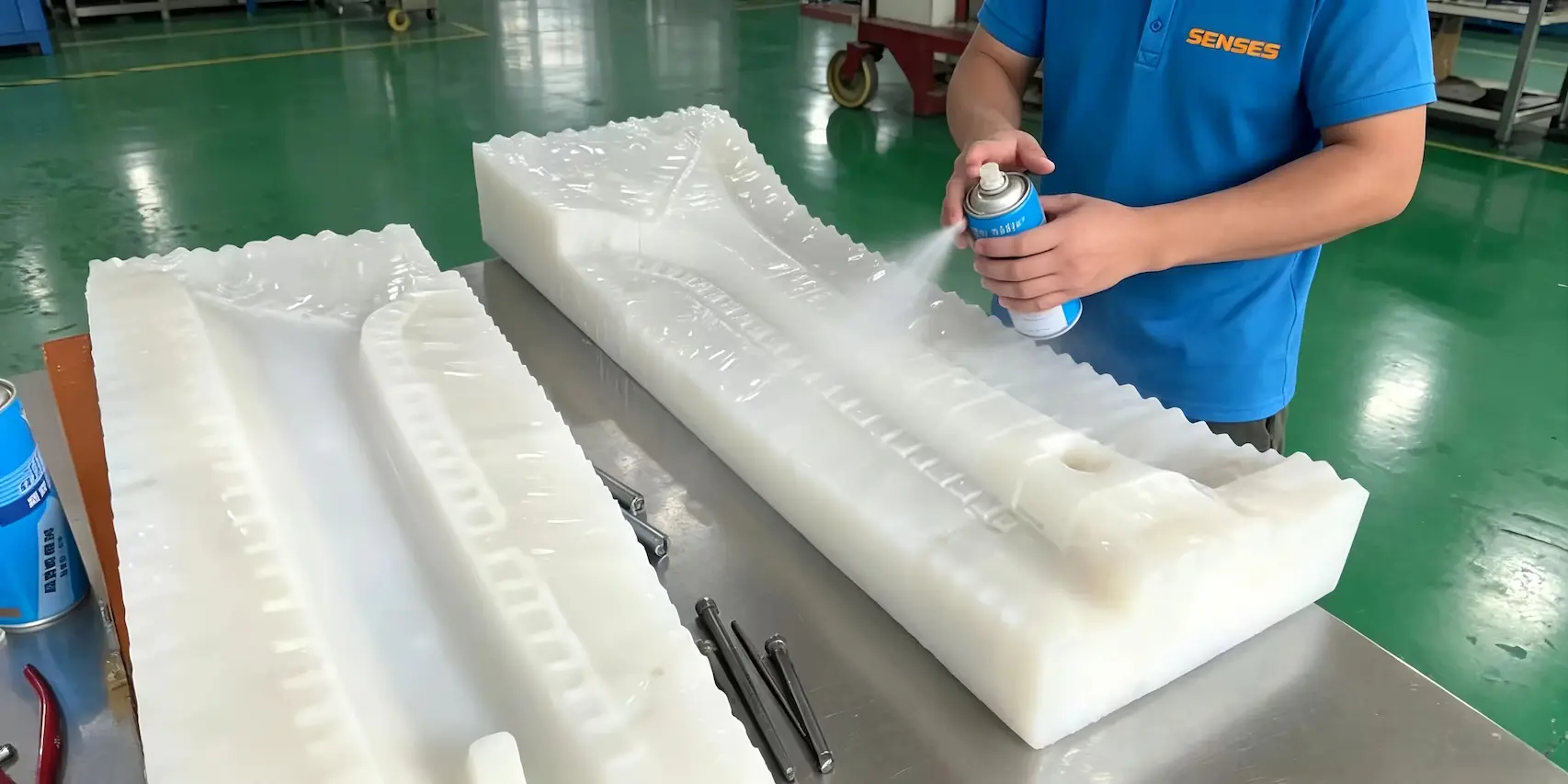
A vacuum casting manufacturer produces custom parts using molds and castable materials, often polyurethane resins and silicone tooling. The process is commonly used for prototypes and low-volume manufacturing.
Is vacuum casting available in the USA?
Yes. US customers can source related polyurethane casting and prototyping services from domestic suppliers as well as international manufacturers serving the American market.
How many parts can a silicone mold produce?
Mold life varies with part geometry, resin selection, surface requirements, and handling. Ask the supplier to confirm the expected usable castings per mold for your specific project.
Is vacuum casting cheaper than injection molding?
For small batches, vacuum casting may require a lower initial tooling investment. For larger production volumes, injection molding can offer lower unit costs. The break-even point depends on tooling and production requirements.
Can vacuum casting produce transparent parts?
Yes, suitable clear casting resins can produce transparent or translucent components. Optical quality depends on material selection, mold quality, geometry, and finishing.
What should US buyers check before ordering overseas?
Confirm shipping terms, import responsibilities, total landed cost, production samples, quality documentation, payment terms, and the process for resolving manufacturing defects.
Request a Custom Vacuum Casting Quote
Share your CAD files, material requirements, and production quantity with Senses Mold to discuss a suitable manufacturing solution.
Get a Vacuum Casting Quote