CUSTOM 3D PRINTING SERVICE

Custom 3D Printing Service for OEM
Prototypes & Production Parts

In-house 3D printing for custom prototypes, functional parts, and low-volume production — with engineering support from CAD review to finished parts.

IN-HOUSE MANUFACTURING • ENGINEERING SUPPORT • PROTOTYPE TO PRODUCTION
20+ Years Manufacturing Experience
5000+ Custom Projects
No MOQ Prototype & Low-Volume
OEM Engineering Support
IN-HOUSE 3D PRINTING MANUFACTURING

In-House 3D Printing for Custom Parts, Prototypes & Low-Volume Production

SENSES provides in-house 3D printing manufacturing for OEM prototypes, functional parts, and low-volume production. Our engineering team reviews your CAD files, part geometry, material requirements, tolerances, and finishing needs before production to help ensure the right process and practical manufacturing solution.

From custom 3D printed parts and engineering prototype parts to industrial 3D printed parts and low-volume production components, we support projects from initial design review through finished parts with direct engineering and manufacturing communication.

01
CUSTOM 3D PRINTED PARTS

Custom 3D Printed Parts for Real Product Development

Produce custom 3D printed parts for prototypes, functional testing, fit checks, housings, brackets, covers, and other application-specific components.

02
OEM ENGINEERING SUPPORT

Engineering Support Before 3D Printing

Our engineers can review CAD files, part geometry, material requirements, tolerances, and production requirements to identify potential manufacturing issues before printing.

03
PROTOTYPE TO LOW-VOLUME PRODUCTION

From 3D Printing Prototypes to Low-Volume Production

3D printing can support more than early-stage prototypes. We also produce low-volume 3D printed parts, functional prototypes, and production components when tooling is not yet practical or production quantities are limited.

04
DIRECT MANUFACTURING SUPPORT

Direct Engineering & Manufacturing Communication

Work directly with our engineering and production team instead of navigating a sourcing marketplace. Your project can be reviewed around part requirements, manufacturability, quality expectations, finishing, quantity, and production needs.

3D printing DFM review and CAD design support for custom parts
DFM CAD & Engineering Review
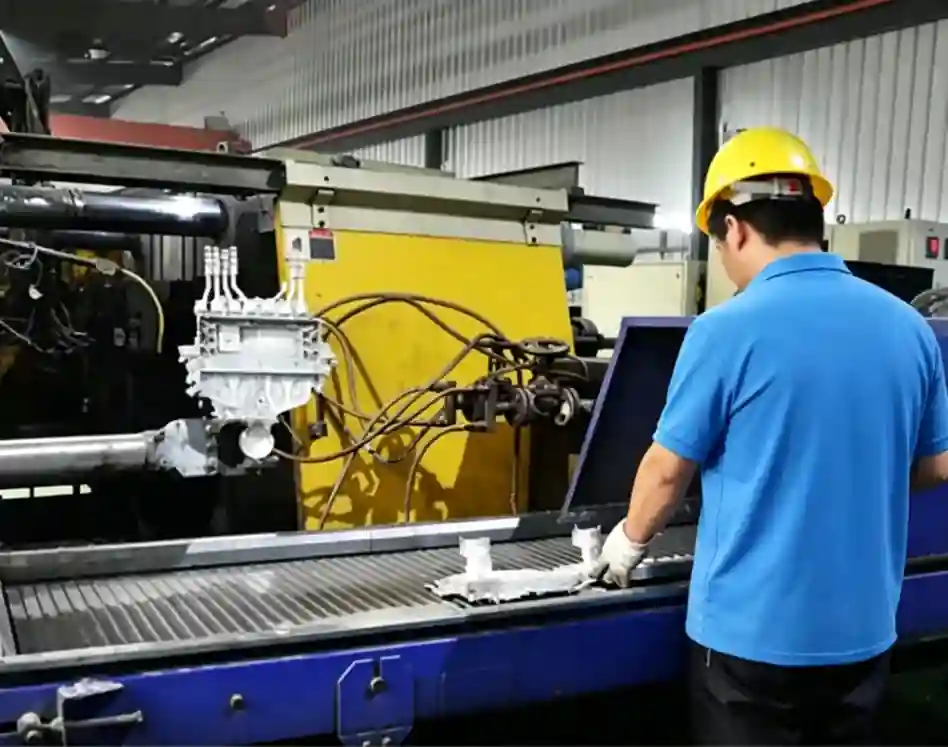
In-house 3D printing equipment for custom prototypes and production parts
EQUIPMENT 3D Printing Equipment
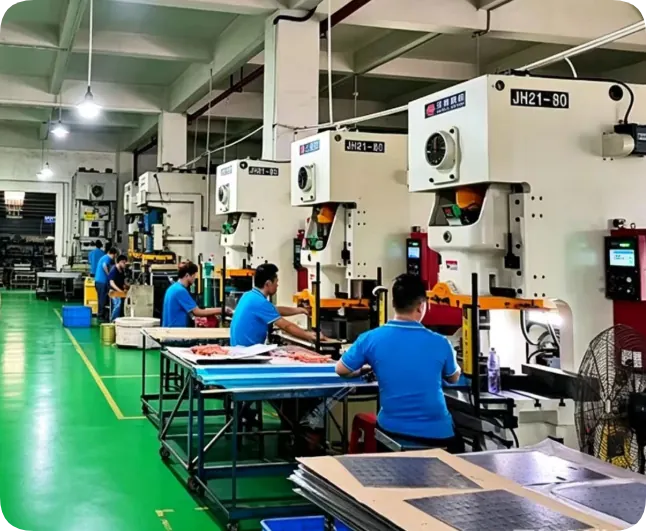
Rapid prototyping and 3D printing service for custom prototype parts in China
MANUFACTURING Rapid Prototyping & 3D Printing
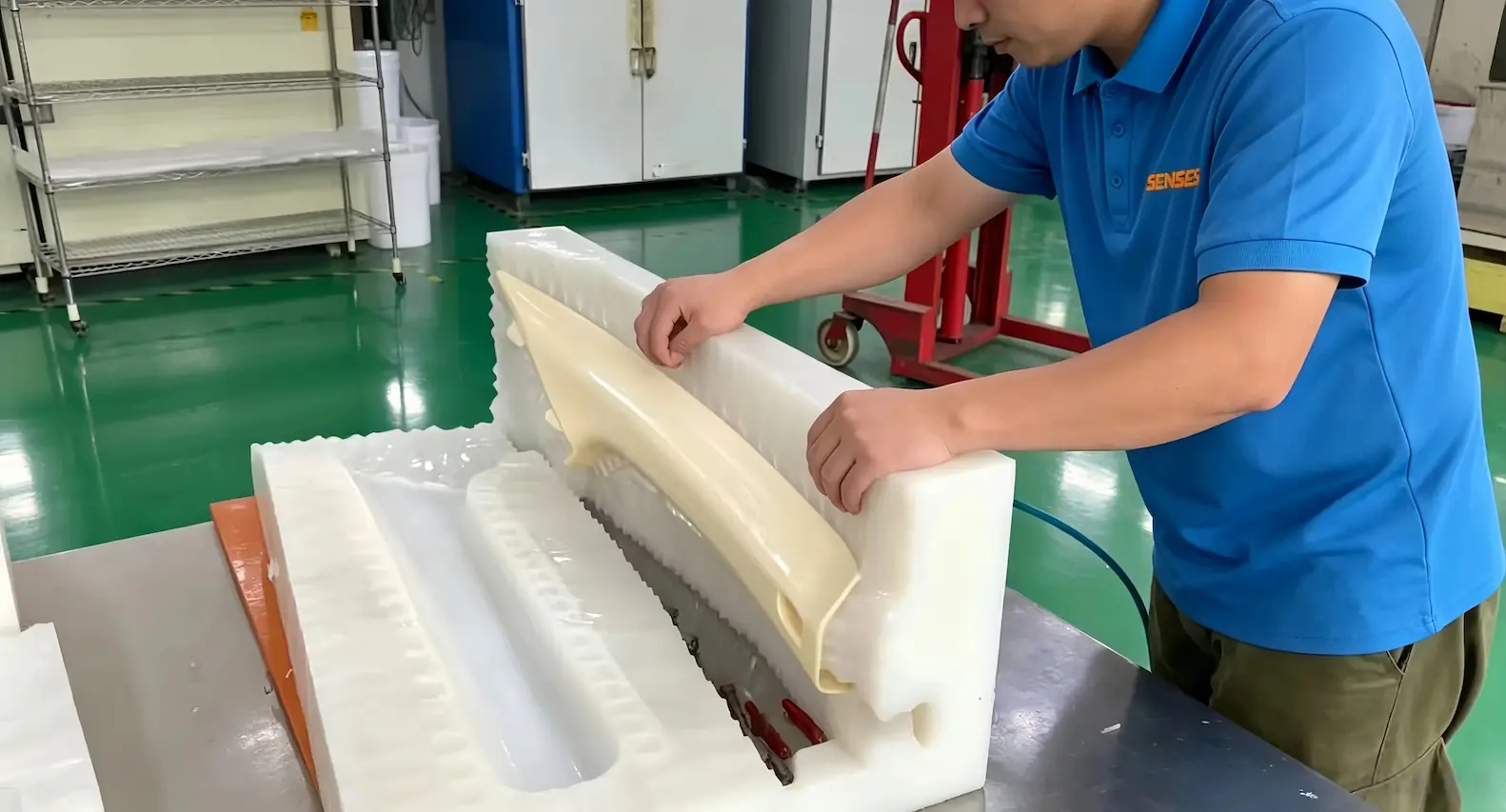
3D print on demand manufacturing for custom parts and low-volume production
WORKING SHOP 3D Print On Demand
NEED CUSTOM 3D PRINTED PARTS?

Send us your CAD file and let our engineers review your part requirements, quantity, material, and production needs.

UPLOAD YOUR CAD FILE
3D PRINTING TECHNOLOGIES

3D Printing Technologies for Different Part Requirements

Different 3D printing technologies offer different combinations of detail, strength, surface finish, material performance, build size, and production efficiency. SENSES provides custom 3D printing service for OEM prototypes, functional parts, and low-volume production, with engineering support to help select a practical process for your part.

SLA 3D printing service for high-detail prototypes and custom parts 01

SLA 3D Printing for High-Detail Custom Parts

SLA 3D printing produces detailed parts with smooth surfaces and fine features, making it suitable for visual prototypes, presentation models, housings, and other custom 3D printed parts where appearance and detail are important.

BEST FOR

High-detail prototypes · Smooth surfaces · Visual models

VIEW SLA 3D PRINTING →
SLS 3D printing service for functional nylon prototypes and custom parts 02

SLS 3D Printing for Functional Nylon Parts

SLS 3D printing is well suited for functional nylon components, complex geometries, and custom 3D printed parts that require practical mechanical performance without traditional support structures.

BEST FOR

Functional parts · Complex geometry · Nylon components

VIEW SLS 3D PRINTING →
MJF 3D printing for functional prototypes and low-volume production parts 03

MJF 3D Printing for Functional Prototypes & Production Parts

MJF 3D printing provides consistent functional parts for engineering prototypes, product validation, and low-volume production. It can be a practical option when you need repeatable production parts without committing to injection molding tooling.

BEST FOR

Functional prototypes · Low-volume production · Repeat parts

EXPLORE MJF 3D PRINTING →
FDM 3D printing for large prototypes, functional parts and rapid manufacturing 04

FDM 3D Printing for Large Prototypes & Functional Parts

FDM 3D printing is a practical option for larger prototypes, early-stage design verification, fixtures, tooling aids, and functional parts where fast iteration and cost efficiency are important.

BEST FOR

Large parts · Fast prototypes · Cost-sensitive projects

VIEW FDM 3D PRINTING →
DLP 3D printing for high-resolution prototypes and detailed custom parts 05

DLP 3D Printing for High-Resolution Prototypes

DLP 3D printing uses projected light to produce detailed parts efficiently, making it suitable for small components, fine features, and high-resolution prototypes where detail and surface quality are important.

BEST FOR

Small parts · Fine details · High-resolution prototypes

VIEW DLP 3D PRINTING →
NEED HELP CHOOSING A 3D PRINTING PROCESS?

Tell us your part requirements, material, quantity, tolerance, surface finish, and application. Our engineers can help identify a practical 3D printing technology for your project.

CHOOSE THE RIGHT 3D PRINTING PROCESS

How to Choose the Right 3D Printing Technology for Your Part

Choosing the right 3D printing technology depends on part geometry, required detail, mechanical performance, material, surface finish, and application. SLA, SLS, MJF, FDM, and DLP offer different advantages for prototypes, functional parts, and low-volume production. SENSES reviews your part requirements to help identify a practical 3D printing process.

WHAT MATTERS FOR YOUR PART?
3D PRINTING PROCESS CONSIDERATIONS
01
PART DETAIL

Fine Features & Small Details

For small features, fine text, thin sections, detailed geometry, or appearance-focused prototypes, resolution and surface quality should be considered when selecting the process.

SLA 3D Printing / DLP 3D Printing

Common options for high-detail prototypes, fine features, small components, and smooth surface requirements.

02
FUNCTIONAL PERFORMANCE

Strength & Functional Requirements

Parts used for assembly, mechanical testing, functional validation, or repeated handling require a suitable combination of material performance, strength, and part geometry.

SLS 3D Printing / MJF 3D Printing

Practical options for functional nylon parts, complex geometries, engineering prototypes, and components requiring mechanical performance.

03
PART SIZE

Large Parts & Build Volume

Larger housings, fixtures, tooling aids, and full-size prototypes require attention to available build volume, part orientation, structural stability, and printing efficiency.

FDM 3D Printing

A practical option for larger prototypes, fixtures, tooling aids, and functional parts where build size and fast iteration are important.

04
SURFACE FINISH

Surface Appearance & Finishing

If parts are intended for visual evaluation, customer presentation, or appearance validation, the printing process and available post-processing should be considered together.

SLA / DLP 3D Printing + Post-Processing

Suitable options when smooth surfaces, detailed geometry, and presentation-ready custom 3D printed parts are important.

NOT SURE WHICH PROCESS FITS YOUR PART?

Share your part requirements, material, quantity, tolerance, surface finish, and application with our engineering team. We can help you compare suitable 3D printing options for your project.

3D PRINTING MATERIALS

3D Printing Materials for Custom Prototypes & Production Parts

Material selection affects the strength, flexibility, heat resistance, dimensional stability, surface finish, and functional performance of 3D printed parts. SENSES provides 3D printing materials for custom prototypes, functional components, engineering validation, and selected low-volume production applications across metal 3D printing, resin 3D printing, and elastomer and rubber-like materials.

METAL 3D PRINTING
RESIN 3D PRINTING
ELASTOMERS & RUBBER-LIKE MATERIALS
MATERIALS
01 Stainless Steel
02 Aluminum
03 Titanium
04 Tool Steel
05 Inconel
Stainless Steel 3D Printing
METAL 3D PRINTING

Stainless Steel 3D Printing

Stainless steel 3D printing is suitable for functional components and engineering prototypes requiring a combination of strength, durability, and corrosion resistance. It can be used for complex geometries that are difficult or costly to produce with conventional manufacturing methods.

KEY PROPERTIES
Strength Corrosion Resistance Durability Complex Geometries
SUITABLE APPLICATIONS
Functional metal parts Engineering prototypes Complex components Low-volume production
LEARN MORE →
MATERIALS
01 Standard Resin
02 ABS-Like Resin
03 Tough Resin
04 Clear Resin
05 High-Temperature Resin
06 Castable Resin
Standard Resin for Detailed Prototypes
RESIN 3D PRINTING

Standard Resin for Detailed Prototypes

Standard resin 3D printing is suitable for visual prototypes, concept models, detailed components, and design verification where fine features and surface quality are important.

KEY PROPERTIES
Fine Detail Smooth Surface Dimensional Stability Appearance
SUITABLE APPLICATIONS
Visual prototypes Concept models Detailed parts Design validation
LEARN MORE →
MATERIALS
01 TPU
02 Flexible Resin
03 Rubber-Like Resin
TPU 3D Printing for Flexible & Durable Parts
ELASTOMERS & RUBBER-LIKE MATERIALS

TPU 3D Printing for Flexible & Durable Parts

TPU 3D printing provides flexibility, elasticity, and resistance to repeated deformation, making it suitable for functional flexible components, protective parts, and prototypes requiring durable elastic performance.

KEY PROPERTIES
Flexibility Elasticity Abrasion Resistance Durability
SUITABLE APPLICATIONS
Flexible prototypes Protective components Grips Flexible functional parts
LEARN MORE →
NOT SURE WHICH 3D PRINTING MATERIAL FITS YOUR PART?

Tell us your part function, mechanical requirements, operating environment, quantity, surface finish, and application. Our engineering team can help you evaluate suitable 3D printing materials and identify a practical manufacturing solution for your project.

GET MATERIAL RECOMMENDATION
3D PRINTING SURFACE FINISHING / POST-PROCESSING

3D Printing Surface Finishing & Post-Processing

3D printing surface finishing can improve the appearance, texture, surface quality, and functional performance of finished parts. SENSES provides applicable 3D printing post processing options based on the printing technology, material, part geometry, and application requirements.

Sanding 3D printed parts for smoother surface finish
SANDING

Smoother Surface Finish for 3D Printed Parts

Sanding can reduce visible layer lines and improve surface smoothness on suitable 3D printed parts. It can also prepare surfaces for additional finishing processes such as painting.

Bead blasting surface finishing for 3D printed parts
BEAD BLASTING

Uniform Surface Texture for 3D Printed Parts

Bead blasting can create a more uniform surface appearance while reducing visible printing marks on compatible materials and geometries.

Polishing 3D printed parts for improved surface quality
POLISHING

Polishing 3D Printed Parts for Better Surface Quality

Polishing 3D printed parts can improve surface smoothness and visual appearance when the material, geometry, and finishing requirements are suitable.

Painting 3D printed parts for custom colors and product appearance
PAINTING

Painting 3D Printed Parts for Custom Appearance

Painting 3D printed parts can add color and improve the visual appearance of prototypes, housings, covers, and other custom components. Surface preparation may be required before painting.

NEED THE RIGHT FINISH FOR YOUR 3D PRINTED PARTS?

Tell us your 3D printing process, material, surface requirements, part geometry, and application. Our engineering team can review your requirements and help identify suitable finishing options for your 3D printed parts.

3D PRINTING BUILD SIZE & DESIGN REQUIREMENTS

3D Printing Build Size, Features & Design Requirements

3D printing design guidelines should be considered before production because part size, build volume, wall thickness, feature size, and orientation can affect printability and final part performance. SENSES reviews your CAD geometry and project requirements before production.

01

3D Printing Wall Thickness

Wall thickness should be considered based on the selected technology, material, part size, and functional requirements to improve print reliability and structural stability.

02

3D Printing Holes & Internal Features

Hole size, geometry, orientation, and post-processing should be considered for internal features and openings, especially when dimensional requirements are important.

03

3D Printing Fine Details & Small Features

Fine text, thin sections, small ribs, and detailed geometry may require a suitable printing technology to achieve reliable feature reproduction.

04

3D Printing Part Orientation

Part orientation can affect surface appearance, support requirements, mechanical performance, build time, and material usage.

3D printing part design and engineering review for custom prototypes and production parts
3D PRINTING ENGINEERING REVIEW
ENGINEERING REVIEW BEFORE 3D PRINTING

Our engineers can review your CAD geometry, build size, material, orientation, and key design features before production.

GET A 3D PRINTABILITY REVIEW
3D PRINTING TOLERANCES & DIMENSIONAL ACCURACY

3D Printing Tolerances & Dimensional Accuracy for Custom Parts

3D printing dimensional accuracy depends on the selected technology, material, part size, geometry, and build orientation. SENSES combines in-house engineering and manufacturing review to evaluate these factors before production and help determine a practical process for custom 3D printed parts with dimensional requirements.

3D PRINTING PROCESS TYPICAL TOLERANCE FEATURE & GEOMETRY ACCURACY FACTORS CRITICAL DIMENSIONS
SLA 3D Printing
Stereolithography
±0.05 mm
Reference value*
Fine features · Small details · Thin sections · Small holes Part geometry · Build orientation · Resin behavior · Post-processing Tight fits · Mating features · Process review
Metal 3D Printing
Industrial Metal Printing
±0.076 mm
Reference value*
Complex geometry · Thin walls · Internal features · Support areas Thermal effects · Geometry · Support strategy · Post-processing Critical interfaces · Secondary machining
SLS 3D Printing
Selective Laser Sintering
±0.25 mm
Reference value*
Complex geometry · Thin walls · Holes · Internal channels Part size · Geometry · Shrinkage · Thermal behavior Tight dimensional requirements · Process review
MJF 3D Printing
Multi Jet Fusion
±0.30 mm
Reference value*
Complex geometry · Functional features · Holes · Thin sections Part size · Geometry · Material behavior · Thermal effects Critical fits · Process optimization

*Tolerance values shown above are general published industrial reference values, not universal SENSES manufacturing guarantees. Actual dimensional accuracy may vary according to technology, material, part geometry, part size, build orientation, process conditions, and post-processing.

HAVE CRITICAL DIMENSIONS ON YOUR PART?

Send your CAD file or technical drawing. Our engineering team can review the critical dimensions, tolerances, geometry, and manufacturing requirements for your 3D printed parts.

GET AN ENGINEERING REVIEW
3D PRINTING FOR RAPID PROTOTYPING

3D Printing for Rapid Prototyping & Product Development

3D printing helps OEM teams identify design and functional issues before tooling or production, reducing unnecessary tooling changes and accelerating engineering decisions. SENSES provides rapid prototyping 3D printing for custom prototype parts with direct engineering support.
3D printing rapid prototyping for OEM product development and functional prototype parts
CONCEPT VALIDATION
Create 3D printed prototypes to evaluate product shape, proportions, enclosure concepts, and overall design before investing in production tooling.
FIT & ASSEMBLY
Check component fit, mating features, clearances, assembly sequence, and potential interference before moving into production.
FUNCTIONAL TESTING
Produce functional prototype parts for handling, mechanical testing, enclosure testing, airflow evaluation, and other product validation requirements.
DESIGN ITERATION
Modify CAD geometry, produce updated prototype parts, test the changes, and repeat the process without waiting for production tooling.
READY TO BUILD YOUR PROTOTYPE?

Send your CAD file, drawing, or prototype requirements. Our engineering team can review your project and recommend a practical 3D printing solution.

START YOUR PROTOTYPE PROJECT
LOW-VOLUME 3D PRINTING

Low-Volume 3D Printing for Production Parts

When production quantities are too small to justify dedicated tooling, 3D printing can provide a practical way to produce functional parts without waiting for molds or committing to a large tooling investment. SENSES supports low-volume 3D printing for customized parts, repeat orders, and selected end-use applications.

In-house low-volume 3D printing manufacturing for custom production parts
LOW-VOLUME 3D PRINTING
01
SMALL-BATCH PRODUCTION
Small-Batch 3D Printing

Produce limited quantities of functional 3D printed production parts without committing to dedicated production tooling.

02
END-USE COMPONENTS
Functional & End-Use Parts

Use 3D printing for production when material performance, geometry, dimensional requirements, and application needs are suitable.

03
REPEAT PRODUCTION
Repeat Orders from Digital CAD

Continue producing validated parts from digital CAD data, supporting low-volume manufacturing and customized production requirements.

WHEN 3D PRINTING MAKES SENSE

Production 3D printing can be considered when quantities are limited, product configurations vary, or tooling investment does not match the required production volume.

LIMITED QUANTITY
CUSTOMIZED PARTS
DIGITAL PRODUCTION
NEED LOW-VOLUME PRODUCTION PARTS?

Request a Production Quote

Tell us your quantity, part requirements, material, and application. Our engineering team can review your project and recommend a practical 3D printing solution.

FROM PROTOTYPING TO PRODUCTION

FROM 3D PRINTING PROTOTYPING TO PRODUCTION

Manufacturing requirements change as a product moves from early development to production. SENSES MOLD provides 3D printing, CNC machining, vacuum casting, and injection molding to support different volumes, materials, performance requirements, and production goals.

PROTOTYPING

3D Printing

Rapidly produce prototypes for design verification, functional testing, assembly checks, and early-stage product development without production tooling.

BEST FOR

Design iteration · Functional prototypes · Complex geometries · Early validation

Industrial 3D printing for prototype and custom production parts
LOW-VOLUME & BRIDGE PRODUCTION

Vacuum Casting / CNC Machining

When prototype quantities increase or production-like materials, surface finishes, or functional requirements are needed, vacuum casting or CNC machining can provide a practical bridge before dedicated production tooling.

BEST FOR

Small batches · Functional parts · Market testing · Pre-production

Vacuum casting for low-volume production and bridge manufacturing
HIGH-VOLUME PRODUCTION

Injection Molding

When production volumes justify dedicated tooling, injection molding provides repeatable part quality, efficient cycle times, and lower unit costs at scale.

BEST FOR

Mass production · Repeat orders · Consistent quality · Lower unit cost

Injection molding for high-volume plastic production parts
NOT SURE WHICH PROCESS FITS YOUR PROJECT?

Talk to an Engineer

Part geometry, material, quantity, tolerance, surface requirements, and production goals all influence the right manufacturing process. Our engineering team can help you compare practical options for your project.

ENGINEERING SUPPORT / 3D PRINTING DFM

Is Your CAD Ready for 3D Printing?

A CAD file can look correct on screen and still create problems during production. SENSES provides 3D printing DFM and engineering support to review your CAD design for additive manufacturing, helping identify potential issues before they affect printability, dimensional accuracy, surface quality, cost, or part performance.

WHAT CAN GO WRONG?

Your Part May Be Printable — But Not Yet Production-Ready

3D printing has different manufacturing limits depending on the technology, material, geometry, orientation, and production requirements. Problems that are easy to miss during CAD review can affect the final 3D printed part and lead to unnecessary prototype rework.

Design risks: Thin walls, small gaps, unsupported features, and complex geometry may create 3D printing challenges.

Process risks: The selected 3D printing process and build orientation can affect dimensional accuracy, surface quality, support requirements, and production efficiency.

Material risks: Material behavior can affect strength, dimensional stability, flexibility, surface finish, and application performance.

Production risks: A design that works for one prototype may not be the most practical solution for repeat orders, low-volume production, or functional 3D printed parts.

NEED A 3D PRINTING DESIGN REVIEW?

Send us your CAD file or technical drawing. Our engineering team can provide 3D printing design support and review key manufacturing risks before production.

GET FREE DFM REVIEW
3D PRINTING APPLICATIONS / INDUSTRIES

3D Printing for OEM & Industrial Applications

Custom 3D printed parts for product development, engineering, prototyping, and selected low-volume production across key industries.

3D printing for automotive and mobility industry applications

3D Printing for Automotive & Mobility

Prototypes, housings, brackets, ducts, and functional components for automotive development.

TYPICAL PARTS
Housings · Brackets · Ducts · Prototypes
3D printing for aerospace and defense industry applications

3D Printing for Aerospace & Defense

Lightweight prototypes, brackets, housings, ducts, and complex low-volume components.

TYPICAL PARTS
Brackets · Housings · Ducts · Prototypes
3D printing for industrial equipment automation and robotics

3D Printing for Industrial Equipment & Automation

Custom machine components, automation parts, fixtures, housings, and robotics components.

TYPICAL PARTS
Fixtures · Machine Parts · Housings · Robotics
3D printing for electronics and electrical product development

3D Printing for Electronics & Electrical

Custom enclosures, covers, brackets, mounting components, and functional product prototypes.

TYPICAL PARTS
Enclosures · Covers · Brackets · Prototypes
3D printing for medical and healthcare device development

3D Printing for Medical & Healthcare

Prototypes, equipment housings, functional components, ergonomic models, and application-specific parts.

TYPICAL PARTS
Housings · Models · Components · Prototypes
3D printing for consumer products and appliance development

3D Printing for Consumer Products & Appliances

Custom prototypes, housings, covers, structural parts, ergonomic models, and low-volume production parts.

TYPICAL PARTS
Housings · Covers · Models · Prototypes
HAVE A 3D PRINTING APPLICATION IN MIND?

Talk to an Engineer

Share your part requirements and application. Our engineering team can help identify a practical 3D printing solution.

3D PRINTING COST & LEAD TIME

How Much Does 3D Printing Cost and How Long Does It Take?

Custom 3D printing typically costs US$20–2,000+ per part, with a typical lead time of 3–7 business days. Rush production may be available in 1–3 business days for selected prototype projects.

US$20–2,000+ / PART
Typical Custom 3D Printing Cost

Pricing varies with part size, geometry, technology, material, quantity, finishing and inspection.

3–7 BUSINESS DAYS
Typical Production Lead Time

Lead time depends on CAD review, quantity, technology, post-processing and inspection requirements.

RUSH: 1–3 BUSINESS DAYS
Selected Prototype Projects

Rush production depends on part complexity, material, technology and current production capacity.

COST FACTORS

What Affects 3D Printing Cost?

Part Size & Geometry

Larger or more complex parts generally require more material, build space and machine time.

Printing Technology

FDM, SLA, SLS and MJF offer different capabilities, materials and production costs.

Material

Engineering-grade, reinforced and specialty materials can affect the cost of custom parts.

Quantity

Producing multiple parts together can reduce the average cost per part.

Finishing & Inspection

Sanding, painting, assembly, inserts and dimensional inspection can add processing cost.

LEAD TIME FACTORS

What Affects 3D Printing Lead Time?

CAD & Engineering Review

Geometry, material, tolerances and application requirements are reviewed before production.

Production Preparation

Technology selection, build orientation and production planning affect machine time.

3D Printing

Printing time depends on part size, geometry, layer settings, technology and quantity.

Post-Processing

Support removal, washing, curing, sanding, painting and other finishing can extend the schedule.

Inspection & Delivery

Final inspection, packaging and shipment are completed before delivery.

GET A PROJECT-SPECIFIC QUOTE

Need an Accurate 3D Printing Cost?

Send your CAD file, material and quantity requirements. Our engineering team will review your project and recommend a practical 3D printing solution.

GET A 3D PRINTING QUOTE
3D PRINTING KNOWLEDGE CENTER

Practical 3D Printing Guide for Engineers & OEM Buyers

With 20+ years of manufacturing experience, our engineering team shares practical 3D printing insights from real OEM projects to help you make better decisions on materials, processes, suppliers, and production.

FROM KNOWLEDGE TO YOUR 3D PRINTING PROJECT

Need Help Choosing the Right 3D Printing Solution?

Our engineers can review your part requirements, application, quantity, and production goals to help identify a practical manufacturing approach.

3D PRINTING SERVICE FAQ

3D Printing FAQ for OEM Buyers

Practical answers to common questions about custom 3D printing, CAD files, RFQs, OEM projects, and working with a manufacturing supplier.

Yes. You can send your 3D CAD file together with your project requirements for a custom 3D printing quote. Our engineering team can review the part geometry, quantity, application, and specifications before preparing the quotation.

Yes. SENSES supports custom 3D printed parts based on CAD files, engineering drawings, specifications, and application requirements. Our team works directly with OEM engineering and purchasing teams to clarify technical requirements.

Yes. Our 3D printing service can support repeat OEM orders based on approved part data and production requirements. Before repeat production, our team can review the latest drawing or revision to confirm the requirements.

Yes. An NDA can be arranged upon request before you share confidential CAD files, engineering drawings, product information, or other project data.

Compare engineering communication, manufacturing capabilities, quality systems, production experience, technical response, and repeat OEM support. Working directly with a 3D printing manufacturer can also simplify technical communication and production coordination.

Common 3D CAD formats such as STEP, STP, and STL can be used for most custom 3D printing projects. If your design uses another file format, you can check with our engineering team before submitting your RFQ.

Yes. We support one-off, small-batch, and low-volume 3D printing for product evaluation, functional testing, engineering samples, and initial production requirements.

Yes. Our engineering team can review your CAD file before an order is placed. The initial review helps identify technical questions, missing information, or manufacturing considerations that may need clarification.

Start by sending your CAD file or drawing together with the required quantity, application, material preference if known, and any special requirements. Our engineering team can clarify missing information before preparing your 3D printing quote.

Yes. SENSES is an in-house manufacturing supplier supporting overseas OEM customers with custom 3D printed parts and related manufacturing services. Our engineering team communicates directly with customers throughout the project.

STILL HAVE QUESTIONS?

Talk With a 3D Printing Engineer

Share your CAD file or project requirements and get direct engineering guidance.

Get your quote

Fill out the contact form below,  and you will get your quote within 24 hours.

Email: info@senseschina.com

WhatsApp: +8613790527236